What shapes lift selection in Grand Rapids
Two factors dominate most planning: whether the lift can sit directly beneath the task and whether the surface conditions and emissions rules allow it.
- Indoor medical and research facilities often require electric power, non-marking tires, compact footprints, and strict height-to-weight tradeoffs to protect sensitive floors and equipment.
- High-bay storage and production floors in legacy furniture and new logistics buildings push platform heights while still needing narrow-aisle access and reliable duty cycles.
- Outdoor work windows shrink in winter. Humidity, lake-effect snowfall, and freeze-thaw cycles can leave surfaces slick or soft, which affects traction and leveling.
Category overviews
- Electric scissor lifts: Suited for finished floors and elevated indoor maintenance. Look at platform height, width, turning radius, and battery capacity. Start here for healthcare interiors: /electric-scissor-lift-rental/.
- Rough-terrain scissor lifts: Built for uneven or sloped sites with larger tires and stabilizing features. Useful near river-adjacent grades or hillside work areas. Compare options at /rough-terrain-scissor-lift-rental/.
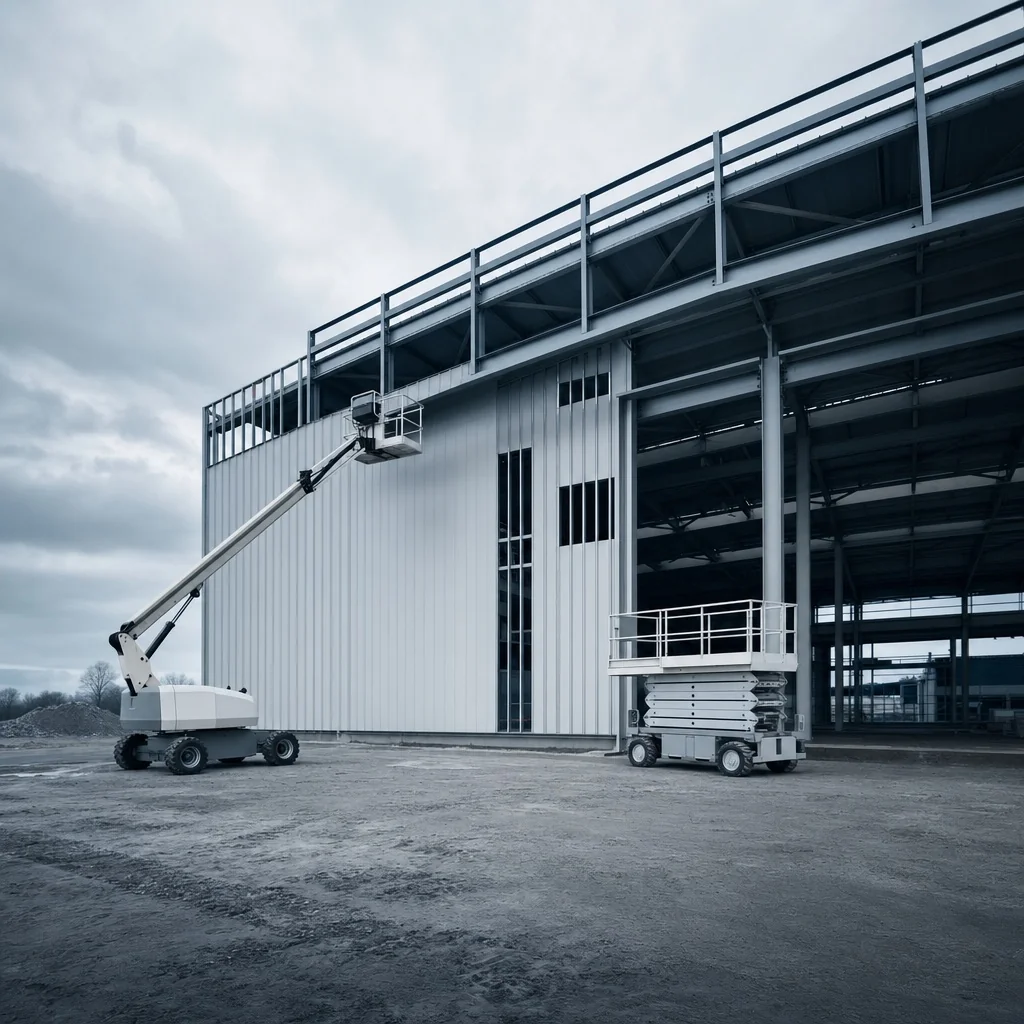
- Boom lifts: When the machine cannot sit below the task or must reach over obstacles, boom geometry matters. See choices at /boom-lift-rental/, /articulating-boom-lift-rental/, and /telescopic-boom-lift-rental/.
- Vertical mast and material handling: Tight indoor picks and light maintenance may fit /vertical-mast-lift-rental/, while pallet and component moves point to /forklift-rental/ and /telehandler-rental/.
How we structure comparisons
Content is organized by job geometry first—straight-up work vs. up-and-over—then by surface conditions and power source. Local notes flag winter storage concerns, charging access, and floor loading on older buildings.
Planning links
- Explore product categories: /products/
- Contact for local context questions: /contact/
- Read more about the site: /about/