Start with placement and run-time window
The simplest filter is where the unit can sit without blocking patient access, dock doors, or fire lanes. In dense healthcare and research zones, units often need to live on hardscape near service entrances with limited clearance. Measure: - Pad size and turning radius for delivery - Distance to the load panel or temporary distro - Overnight noise limits and light spill to adjacent occupancies
Run-time and fuel strategy come next. Long maintenance shifts in high-bay facilities push toward larger tanks or hybrid light towers to reduce refueling touches during snow events.
Local weather changes starting and grounding
Grand Rapids winters bring moisture, road salt, and freeze-thaw cycles. That affects grounding points, connector protection, and cold-start expectations. Elevated humidity near the river can condense on plugs and cords; plan for elevated cable routing and weather-rated connections. For light towers, confirm the standing surface can drain and resist rutting after a thaw.
Power sizing for indoor-rated work
Healthcare interiors often restrict exhaust and sound near intakes. Where power must feed indoor equipment, consider distance losses along longer temporary runs from outdoor generators sitting below intake lines. Note amperage at startup versus continuous draw for building maintenance tools, lifts, and temporary HVAC. If the task includes charging electric scissor lifts, verify circuit capacity and schedule charging away from peak loads. See lift categories at /electric-scissor-lift-rental/ and /aerial-lift-rental/ for typical charging locations.
Light tower geometry and reach
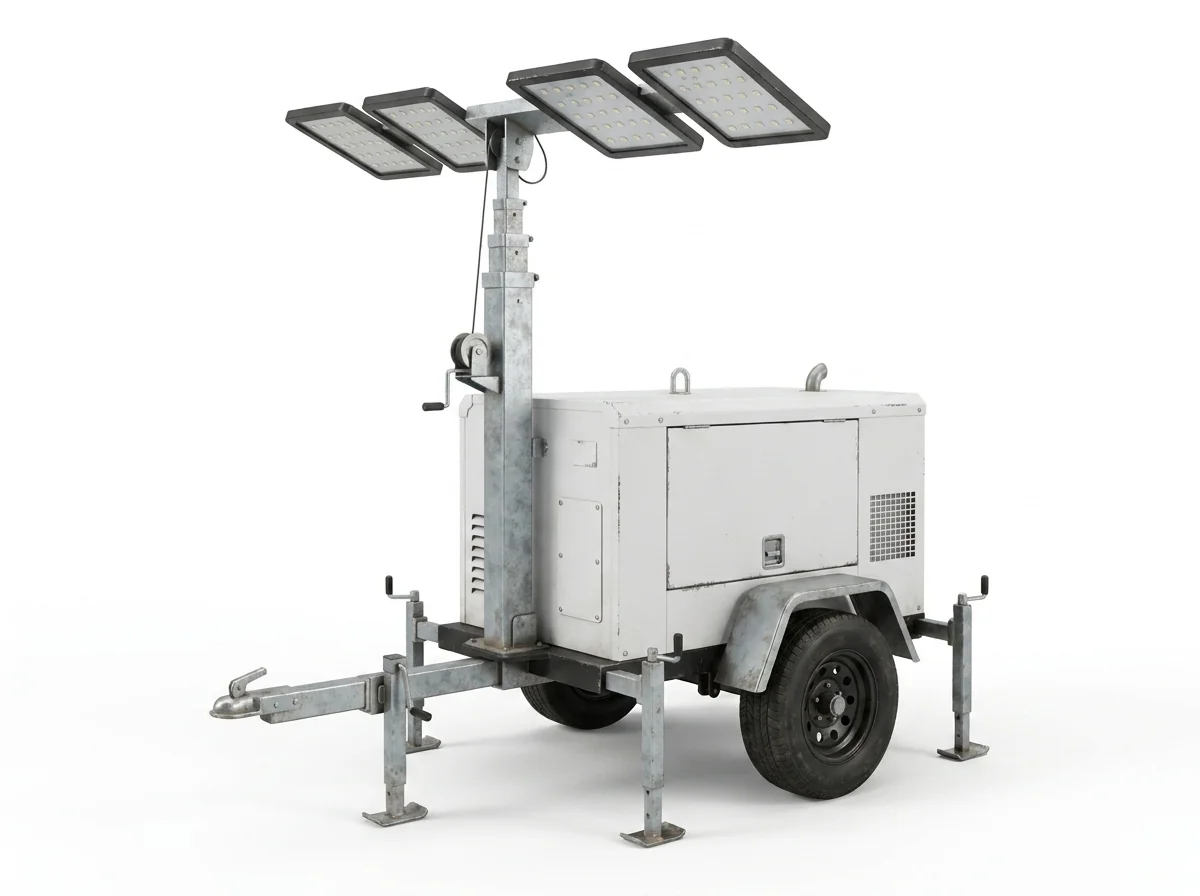
The job geometry is about beam throw and shadow control across snow-bright or wet asphalt. In local distribution yards, fixture height and mast stability matter when winds funnel along open lots. Check: - Mast height relative to building eaves and trees - Setback needed to reduce glare on traffic - Reflectance off snow creating back-scatter
If light must rise above stacked containers or high rack lines, confirm mast clearance with the yard layout. For uneven exterior ground near the river bluffs, rough-terrain bases and outriggers may be required; coordinate with site procedures.
Access routes and surfaces
Winter plowing can narrow routes to service pads. Note curb cuts, slope, and any steel plates. Generators and towers are heaviest at delivery and refueling, so confirm bearing capacity and turning space. When units sit near active lift paths, plan cord protection where forklifts or telehandlers operate. Related material-handling categories: /forklift-rental/ and /telehandler-rental/.
When aerial work is nearby
Where towers support nighttime maintenance on façades or signage, verify that the chosen lift can position safely within the lit area. Compare options at /boom-lift-rental/, /articulating-boom-lift-rental/, and /telescopic-boom-lift-rental/. Actual conditions, the selected unit’s instructions, and site procedures govern elevated work.