Define the placement geometry
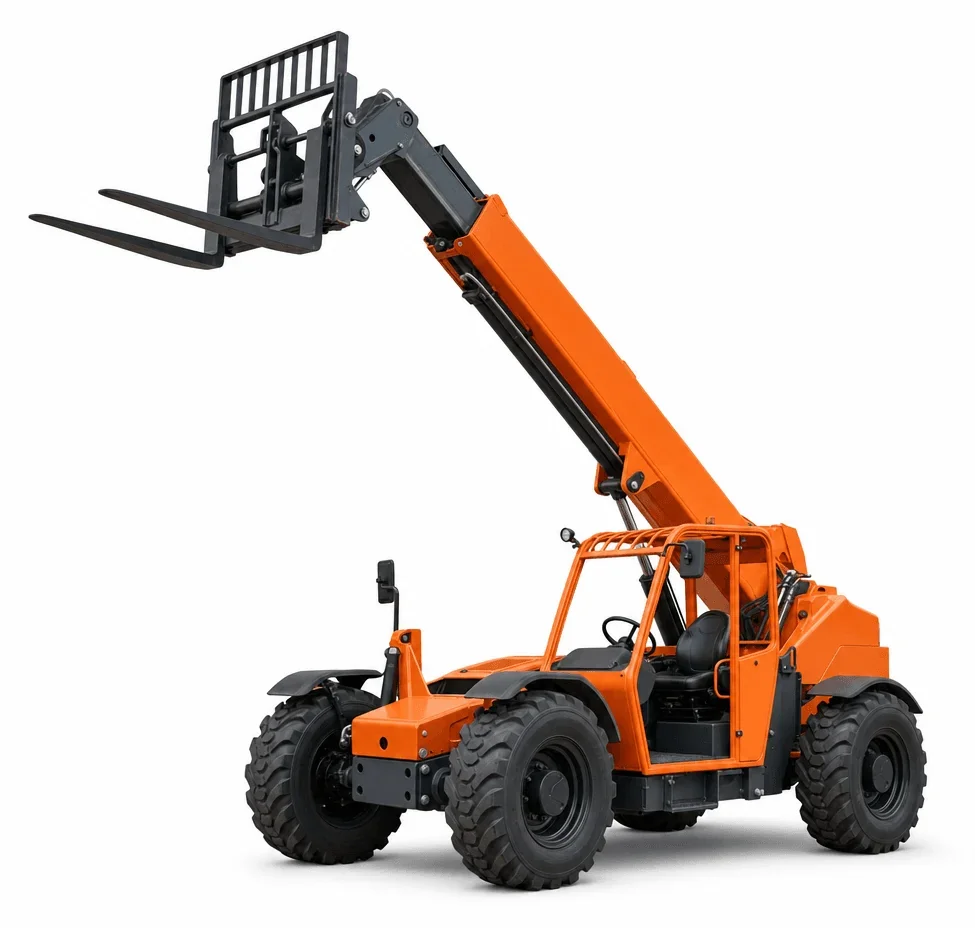
The required landing point sets the telehandler class. Measure: - Horizontal standoff to the landing spot (dock, mezzanine, or roof edge) - Lift height at that point and the weight of the load - Clearance under door headers and through gates from street to staging
If loads must pass over obstacles or enter elevated bays with limited headroom, a compact unit with ample maneuverability may outperform a larger machine.
Site surface, seasons, and corrosion exposure
Local yards see winter salt and spring thaw cycles. That environment affects tire selection and ongoing maintenance planning. On uneven lots or where soft ground appears after snowmelt, ground clearance and rough-terrain features become more important. For indoor placement in occupied facilities, emissions and tire marking typically drive the configuration.
Carriage and attachment considerations
Your material profile—pallets of components, bundled lumber, or light-gauge racking—determines the carriage style and fork length that keep loads within capacity throughout the reach chart. Knowing the heaviest lift at maximum needed reach prevents over-specifying the machine while preserving safety margins defined by the unit’s instructions.
Related categories for elevated access and logistics
- For personnel access to elevated tasks, see /boom-lift-rental/
- For indoor vertical work platforms, see /vertical-mast-lift-rental/
- For temporary site support, see /storage-containers-rental/ and /temporary-fencing-barricades-rental/
Actual conditions, the selected unit’s instructions, and site procedures govern material handling. In Grand Rapids, the combination of lake-effect moisture, salt exposure, and mixed-grade lots often decides which telehandler class fits the job.