Site conditions that drive the selection
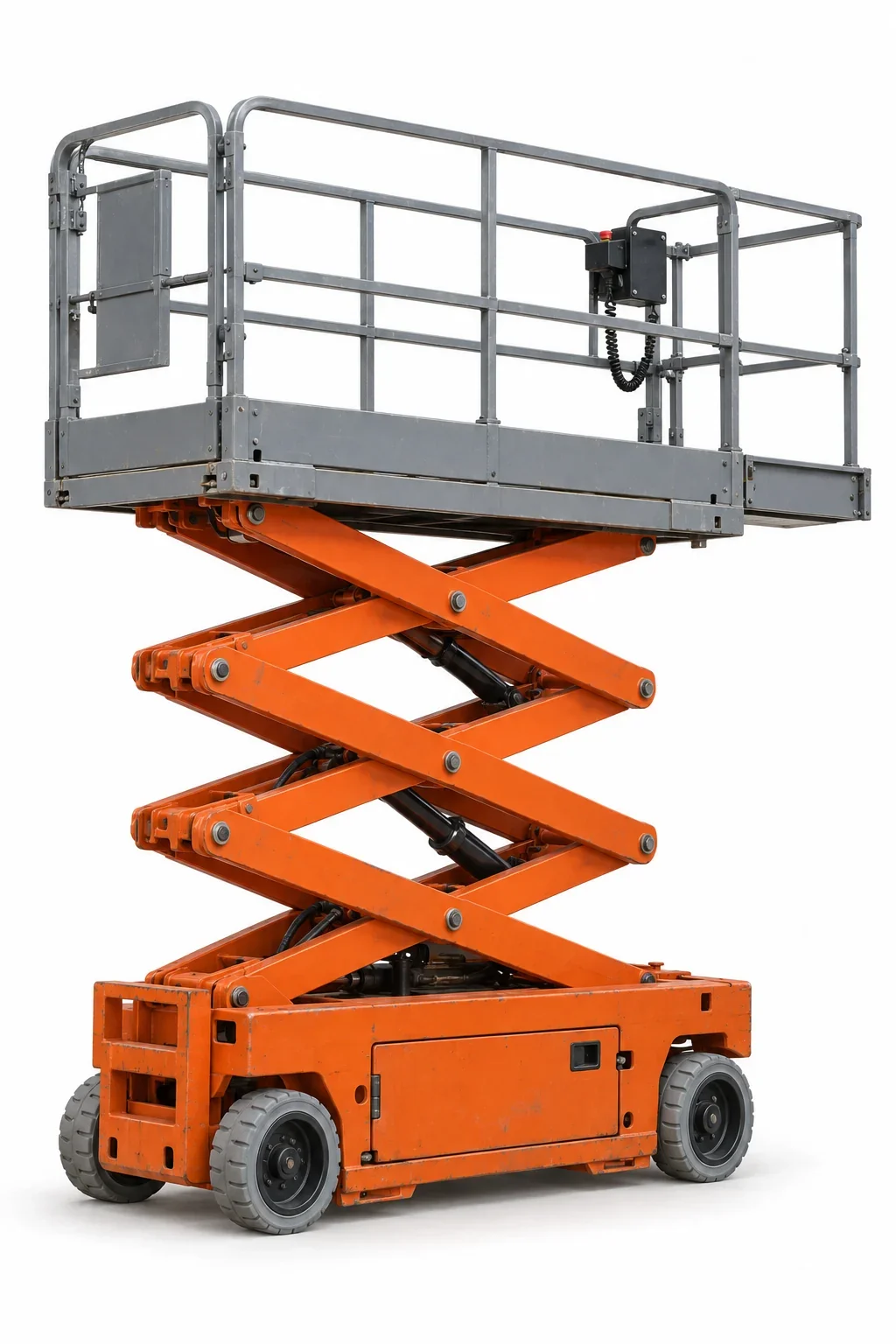
- Surface quality: Crushed stone, mud, or frozen-thaw cycles can bog down slab units. Rough-terrain tires and stabilizing features improve positioning on variable ground. Actual site conditions and the selected unit’s instructions and procedures govern safe setup and operation.
- Slope and step-ups: Approaches from paved lots into job cores may include ruts and curbs. Check grade limits and allow room for turning.
- Access constraints: Older sites and infill projects can have narrow gates. Measure the tightest pinch point and compare to machine width.
Platform height and deck considerations
- Mid-range platforms (about 26–33 ft): Suited to exterior punch lists, siding prep, and low-rise work where reach is vertical.
- Higher platforms (around 40+ ft): Useful for taller façades and finish work when a straight up-and-down approach is feasible.
- Extendable decks add reach along walls without repositioning the chassis, helpful when soft ground limits travel.
Weather timing in Grand Rapids
- Short outdoor windows are common. Plan for mornings with firmer ground during shoulder seasons and reconsider after heavy precipitation.
- Salt and moisture accelerate corrosion on exposed equipment. Inspect contact points and plan for cleaning after winter work.
When a boom lift is a better fit
If the work is offset from the base—over landscaped setbacks, canopies, or utilities—see /boom-lift-rental/ for articulating and telescopic options. For interior phases, compare /electric-scissor-lift-rental/.